

Industrial Fittings Buying Guide: Types, Applications, Materials & How to Choose the Right Fitting

Industrial Fittings Buying Guide
Industrial fittings are essential components used to connect, control, redirect, or terminate pipes and tubes in hydraulic, pneumatic, instrumentation, and industrial fluid-handling systems. Choosing the right fitting is important because the correct material, connection type, size, and pressure rating can directly affect system performance, safety, and service life.
For businesses looking to buy industrial fittings online in India, understanding the different types and their applications can make the purchasing process much easier. Iglele.com provides a range of industrial fittings designed for different hydraulic, pneumatic, and tube-fitting requirements.
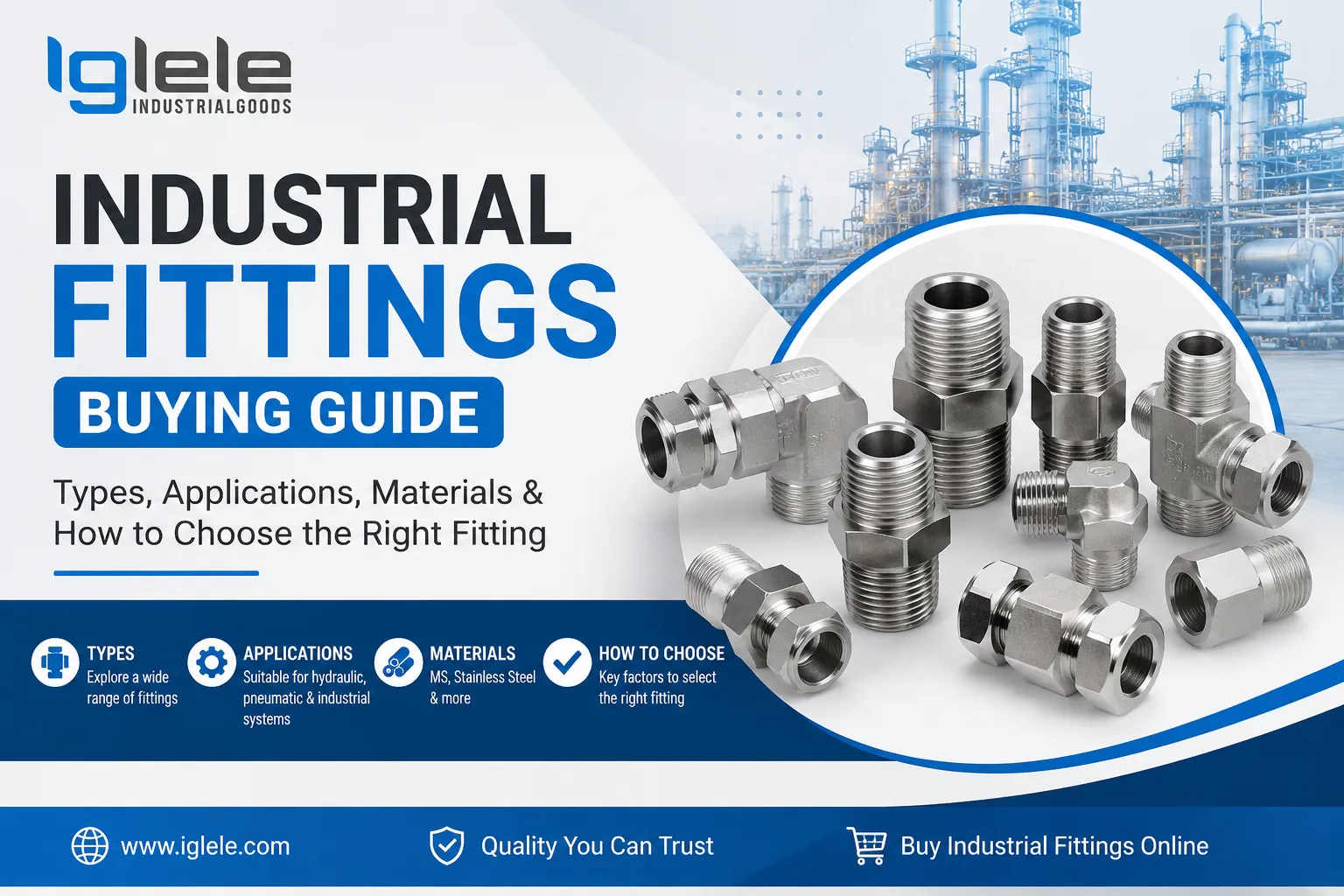
Why Are Industrial Fittings Important?
A piping or tubing system cannot operate efficiently without suitable connection components. Industrial fittings help create reliable connections between different parts of a system.
1. Tube Fittings
Tube fittings are designed to connect tubes securely without requiring traditional pipe-threaded connections in every application.
They are widely used in instrumentation, hydraulic, pneumatic, and industrial tubing systems.
Tube fittings may use compression, ferrule, threaded, or other connection mechanisms depending on the design.
2. Ferrule Tube Fittings
Ferrule fittings use a ferrule to create a secure connection between the tube and fitting body. They are commonly used where reliable tube connections are required.
Stainless steel ferrule tube fittings are particularly useful in applications where corrosion resistance and durability are important.
Which Materials Are Used for Industrial Fittings?
Material selection is one of the most important considerations when buying industrial fittings.
Mild Steel
Mild steel, commonly abbreviated as MS, is used for various industrial applications where strength and cost-effectiveness are important.
MS hydraulic fittings can be suitable for applications where the operating environment does not require the higher corrosion resistance of stainless steel.
Stainless Steel
Stainless steel is widely used when corrosion resistance, durability, and demanding operating conditions are important.
How to Choose the Right Industrial Fitting
Before buying an industrial fitting, consider the following factors.
1. Identify the Thread Type
Thread compatibility is critical.
Different systems can use different thread standards and configurations. Before ordering, verify the required thread specification and whether the connection is male, female, or another configuration.
2. Consider Operating Pressure
Hydraulic and industrial systems can operate at significant pressures. The fitting should be appropriate for the pressure conditions of the application.
Do not select a fitting based only on physical size or appearance.
3. Select the Correct Material
Choose the material according to the operating environment.
For example, an application exposed to moisture or corrosive conditions may require stainless steel, while other industrial applications may use mild steel where appropriate.
4. Consider Temperature
Operating temperature can affect the suitability of a fitting and its sealing components.
Always check the applicable specifications before selecting fittings for high- or low-temperature applications.
Frequently Asked Questions
What are industrial fittings used for?
Industrial fittings are used to connect, redirect, reduce, extend, or terminate pipes and tubes in systems such as hydraulic, pneumatic, instrumentation, and industrial fluid-handling applications.
What are the most common types of industrial fittings?
Common types include hydraulic fittings, pneumatic fittings, tube fittings, ferrule fittings, nipples, plugs, elbows, tees, adapters, and reducers.
Which material is best for industrial fittings?
There is no single material that is best for every application. Mild steel may be suitable for certain general industrial applications, while stainless steel can be preferred when greater corrosion resistance is required.
How do I choose the right hydraulic fitting?
Check the required tube or pipe size, thread specification, connection type, operating pressure, temperature, material, and application before selecting a hydraulic fitting.
What are pneumatic fittings used for?
Pneumatic fittings connect tubing and components in compressed-air and gas systems. They are frequently used in automation, manufacturing, air-control, and pneumatic equipment.
Can I buy industrial fittings online in India?
Yes. Industrial fittings can be purchased online by comparing product specifications, dimensions, materials, connection types, and application requirements. Iglele.com offers online access to various industrial fitting categories and products.
Final Thoughts
Selecting the correct industrial fitting is not simply about choosing a component that physically fits a pipe or tube. The connection size, thread type, material, pressure, temperature, and application all need to be considered.
Whether you need hydraulic fittings, pneumatic fittings, tube fittings, ferrule fittings, or MS hexagonal hydraulic fittings, understanding these specifications can help you make a more informed purchasing decision.
For buyers searching for industrial fittings online in India, Iglele.com is one option to explore when comparing different industrial fitting products and categories.